
 Vironix Health
· Vironix News · 2 min read
AI in Healthcare Still Needs Humans
AI in healthcare is moving fast... and that’s a good thing. Amazon One Medical recently introduced an AI assistant aimed at helping patients better…
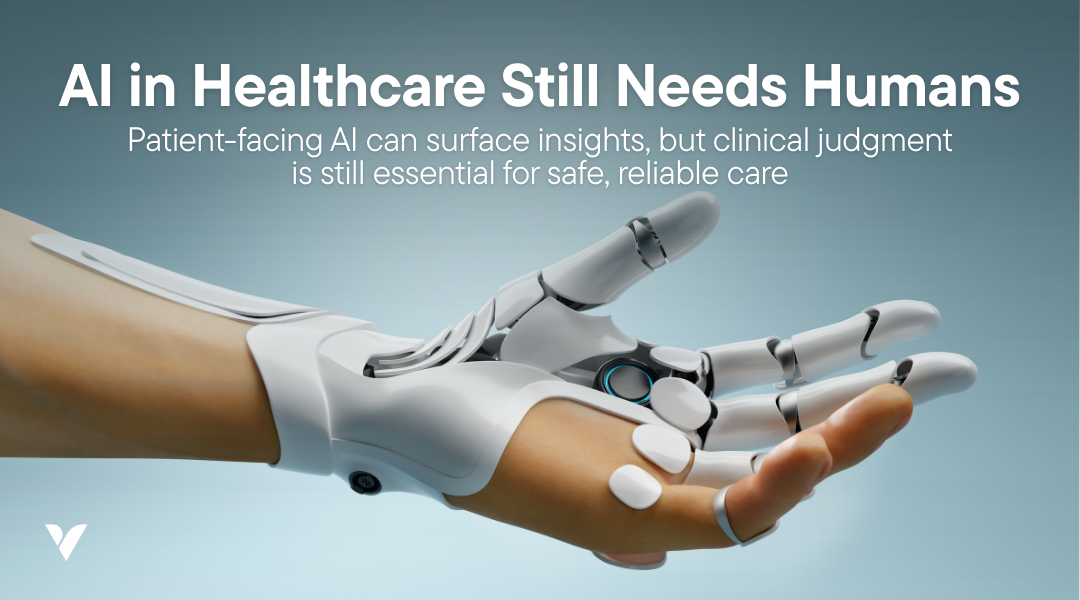
AI in healthcare is moving fast... and that’s a good thing.
Amazon One Medical recently introduced an AI assistant aimed at helping patients better understand their care, manage medications, and navigate next steps.
The launch reflects a broader shift underway in healthcare AI. These tools are no longer confined to documentation, triage, or backend workflows, but are increasingly being placed directly in front of patients, shaping how care is interpreted.
Over the past year, health systems and companies have leaned into AI to: 💙 surface potential diagnoses earlier 💙 help clinicians manage growing patient panels 💙 improve engagement outside the exam room
Although AI promises speed, scale, and consistency in a system strained by workforce shortages and rising demand, healthcare remains a domain where accuracy, context, and accountability are non-negotiable.
AI systems can misread nuance, miss relevant history, or confidently present incomplete information. When that happens, the consequences extend beyond user frustration. They affect clinical decisions, patient trust, and outcomes.
At Vironix Health, we use AI to surface insights and flag what needs attention, not to replace clinical judgment. Human clinicians validate outputs, interpret context, and intervene when necessary.
As patient-facing AI becomes more common, the question may shift from whether these tools are useful to how much autonomy they should have and where human judgment remains essential.
👉 For those who have used AI to understand a health issue or test result, was the tool enough on its own, or did you still want confirmation from a clinician?
Read More Here: https://lnkd.in/gwg7t5sn